How to Actually Work in 4-Hour Blocks (Without Burning Out)
Long work sessions sound exhausting, but they're actually less draining than constant context switching. Here's how to structure 4-hour deep work sprints that leave you energized, not depleted.
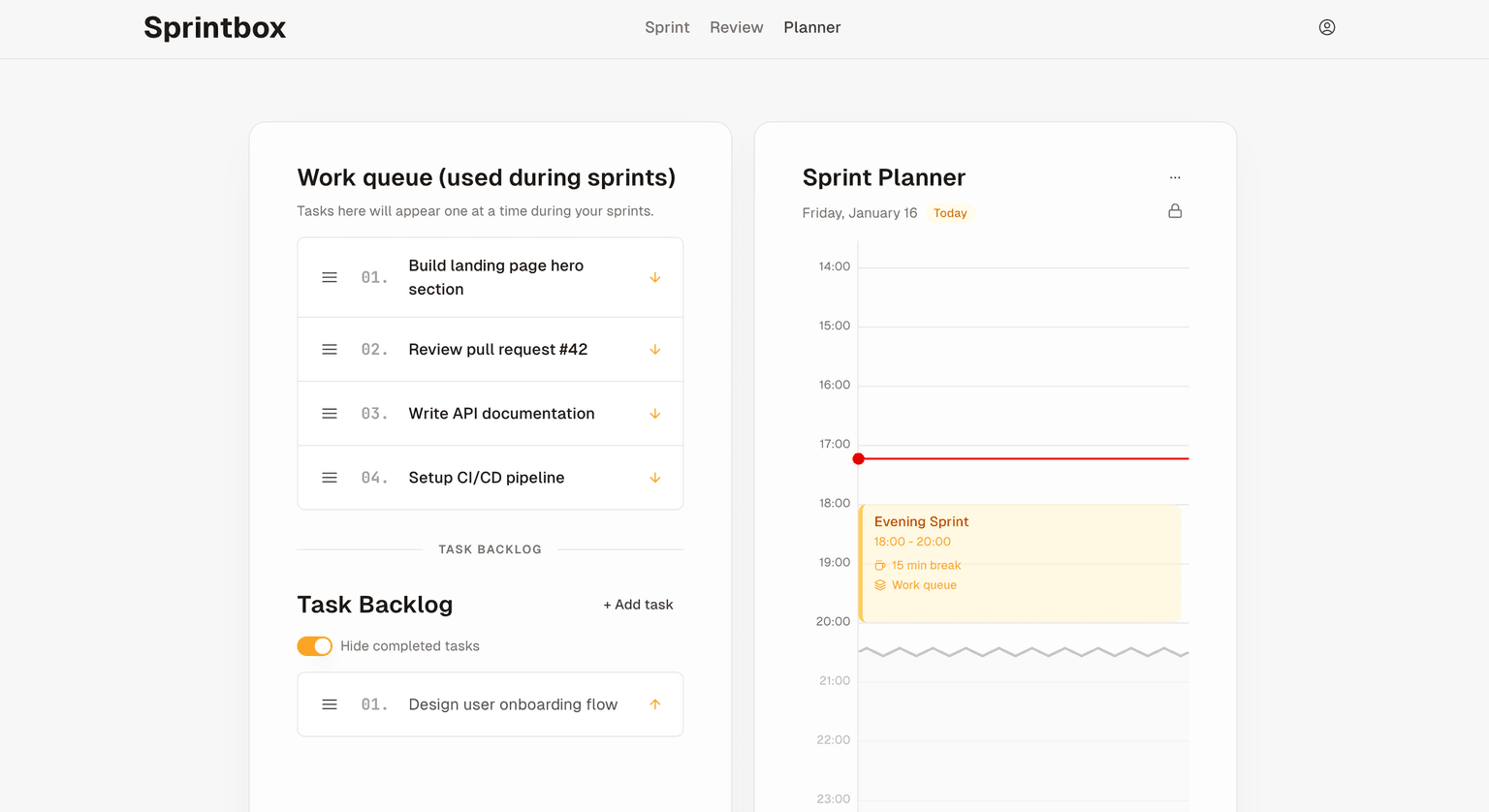
How to Actually Work in 4-Hour Blocks (Without Burning Out)
"Four hours? That sounds exhausting."
This is the most common objection when people hear about working in long, uninterrupted blocks. And it's understandable—most of us are exhausted by a normal workday filled with meetings, interruptions, and constant context switching.
But here's the paradox: Long, focused work sessions are actually less exhausting than fragmented ones.
Why Short Intervals Feel More Tiring
Your brain uses significant energy in two ways:
- Task execution - Actually doing the work
- Task switching - Transitioning between activities
When you work in 25-minute Pomodoro intervals or constantly respond to Slack messages, you're spending enormous amounts of energy on #2. You're context switching dozens of times per day.
Each switch drains your mental resources. By the end of the day, you're exhausted—not from deep work, but from managing interruptions.
The 4-Hour Sprint Structure
Here's how to set up a sustainable 4-hour deep work session:
Pre-Sprint Preparation (15 minutes)
Before you start:
- Choose ONE task - No multitasking
- Gather all materials - Code repos, docs, references
- Set clear outcome - "Implement auth system" not "work on the app"
- Eliminate distractions - Phone off, Slack closed, door shut
- Set your break budget - E.g., 15 minutes total
Sprint Structure (4 hours)
Hour 1: Warm-up and momentum building
  - Start with easiest part
  - Get into flow gradually
  - First real focus around minute 15-20

Hour 2: Peak productivity
  - Full flow state
  - Hardest problems get solved here
  - Minimal need for breaks

Hour 3: Sustained execution
  - Flow continues
  - May need a 5-min break
  - Keep momentum high

Hour 4: Finishing strong
  - Complete the work
  - Document what's done
  - Set up next session
Break Budget Management
You have 15 minutes to use however you need:
- Stuck on a problem? Take 5 minutes to walk and think
- Bathroom break? Use 2 minutes
- Need coffee? 3 minutes
- Still have budget left? Save it for emergencies
The key: You control the breaks. Not a timer.
Common Mistakes to Avoid
1. Not Having a Clear Outcome
Bad: "Work on the website" Good: "Implement user authentication and password reset flow"
Vague goals lead to wandering. Specific outcomes keep you focused.
2. Trying to Multitask
One 4-hour sprint = one significant task. That's it.
Not "work on auth AND fix bugs AND update docs." Pick one.
3. Starting Without Preparation
Don't start a sprint and then realize you need to look up an API, find a reference, or download a tool. This kills momentum.
Prepare everything first.
4. Ignoring Natural Fatigue
If you're genuinely tired at hour 3, take a break. Use your budget.
The goal isn't to suffer. It's to work sustainably without artificial interruptions.
What About Meetings?
Obviously, 4-hour blocks don't work if you have meetings every 90 minutes.
This is why calendar design matters:
- Batch meetings - Tuesday/Thursday afternoons
- Protect mornings - Best for deep work
- Say no strategically - Not every meeting needs you
If you can protect even 2-3 mornings per week for 4-hour sprints, you'll get more deep work done than most people do in a month.
The Results
After adapting to 4-hour sprints, people consistently report:
- More energy - Less mental fatigue
- Better work - Higher quality output
- Greater satisfaction - Feeling of real accomplishment
- Clearer boundaries - Work time is work time, rest time is rest time
The first week feels long. By week two, you won't want to go back.
Start Smaller If You Need To
Can't do 4 hours yet? Start with 2-hour sprints:
- Week 1-2: 2-hour sprints
- Week 3-4: 3-hour sprints
- Week 5+: 4-hour sprints
Build the capacity gradually. Your brain is a muscle—it gets stronger with training.
The Bottom Line
Working in 4-hour blocks isn't about working harder. It's about working in alignment with how your brain actually functions.
Stop fragmenting your day. Start protecting your focus. The work you produce in one 4-hour sprint will surpass what you'd get from eight fragmented hours.
Ready to try sprint-based work? Sprintbox makes it easy to set up, track, and complete 4-hour deep work sessions. Start your free trial.